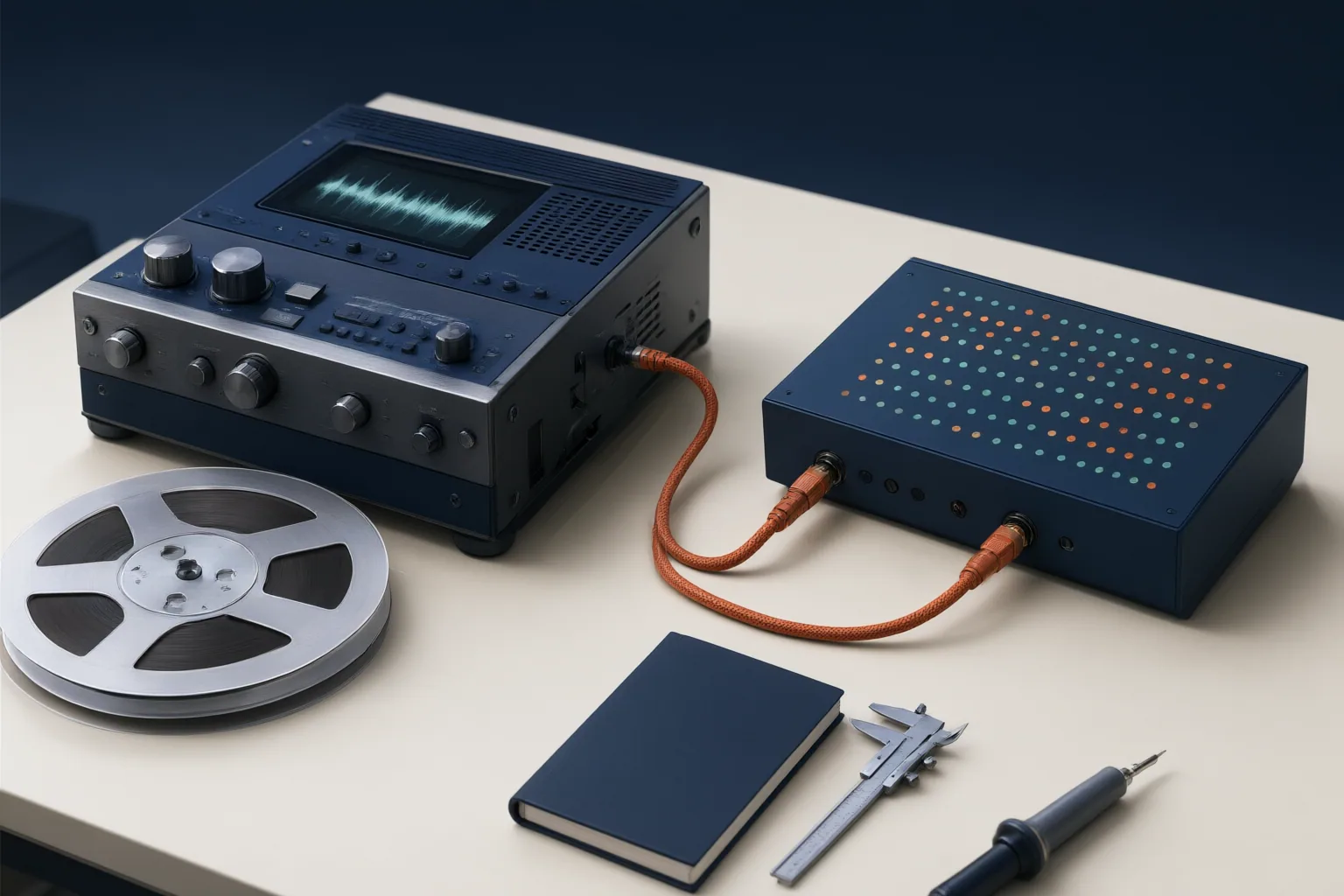
Treat original recordings as immutable source material. Store AI-generated tags, confidence information, provenance, review decisions, and approved catalog metadata in separate structured records so every change remains reviewable and traceable.
Keep Original Audio Separate from Generated Metadata
A non-destructive AI-assisted metadata workflow starts with a clear boundary: original recordings remain source material, while generated metadata lives in a separate file, spreadsheet, database, or catalog system. Cyanite describes deriving tags without pre-existing metadata, manual pre-labeling, or changes to the current file structure. Its listed outputs include genre, mood, energy, instrumentation, valence–arousal values, representative segments, and an automatically generated description, with structured results available through an application or API and exports available on request.
Assign each recording a relevant identifier that connects it to its metadata record. That record can hold generated values, confidence information, processing history, and later approvals without embedding them in the source audio. Record the ingestion point as well: TableVault presents ingestion records and parameter lineage as important parts of transparent human–AI work, particularly when complete tracing across external tools is impractical.
This architecture does not prove that every service leaves uploaded audio unchanged inside its own systems. Check a provider’s storage, retention, privacy, and processing terms before submitting recordings.
Build the Workflow as a Series of Reviewable Stages
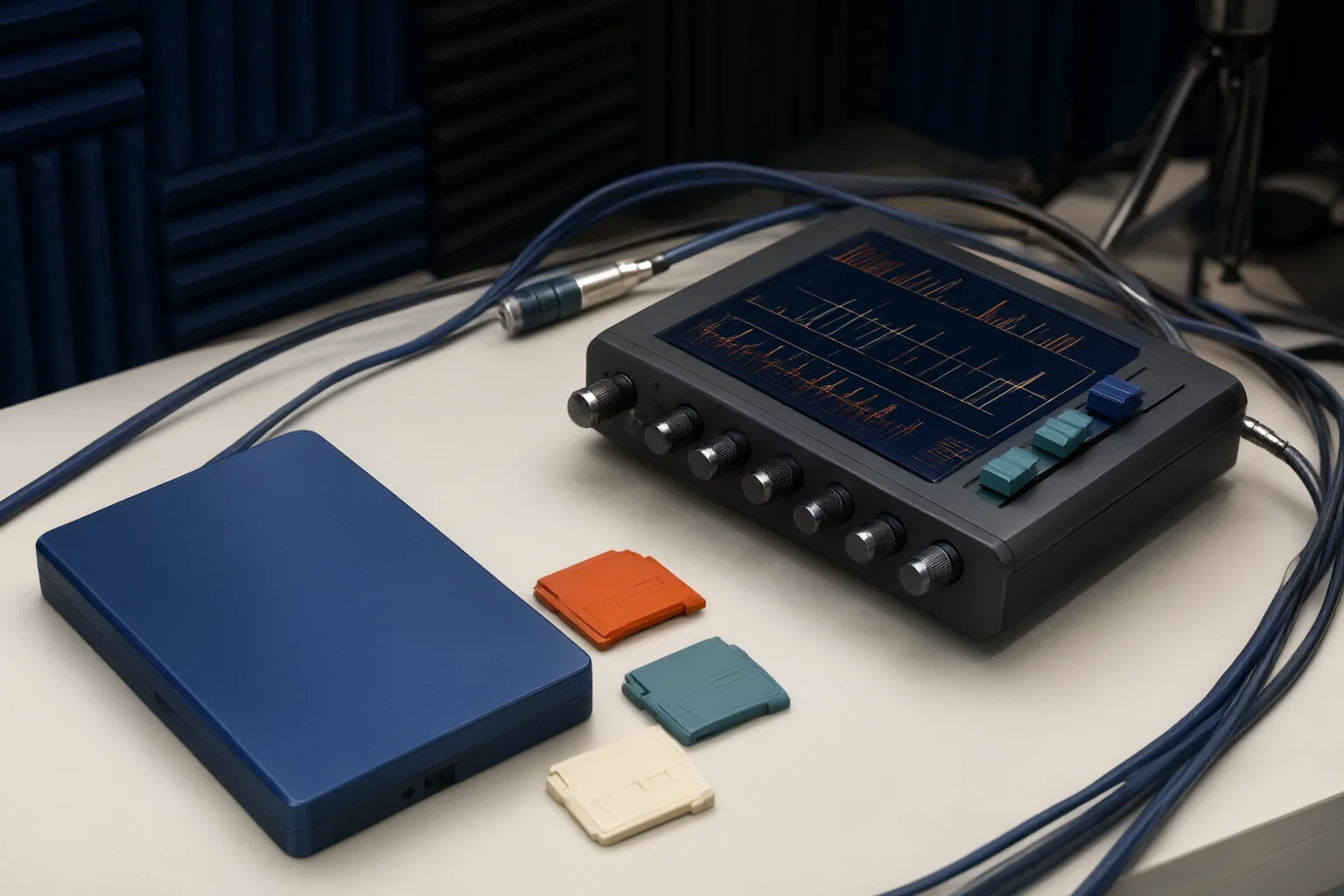
Use explicit stages so model output does not become accepted catalog metadata automatically:
- Ingest: Create a record identifying the recording, the processing session, and the point at which it entered an external tool.
- Extract: Send the permitted audio asset to the selected system and capture its structured output separately.
- Normalize: Map returned labels into your catalog’s chosen field names and vocabulary.
- Match: Where relevant, compare the result with external or existing records rather than assuming the generated description identifies the work correctly.
- Assess confidence: Retain confidence values and route uncertain or taxonomy-sensitive fields for closer review.
- Verify and review: Let a person accept, revise, or reject proposed values according to documented rules.
- Create outputs: Produce approved cataloging files separately from both the original audio and the raw AI response.
This sequence reflects the UT Austin Libraries project’s separation of AI extraction, normalization, record matching, confidence analysis, verification, output creation, and optional human review. That project can also generate a local review interface and a decisions-history spreadsheet before incorporating cataloger decisions into separate output files. Collibra similarly describes derived schemas and tags paired with confidence, traceability, downstream export, and continuing human validation. Operation-status tracing and ingestion records help preserve visibility when several tools participate in the pipeline.
Record Provenance, Confidence, and Human Decisions
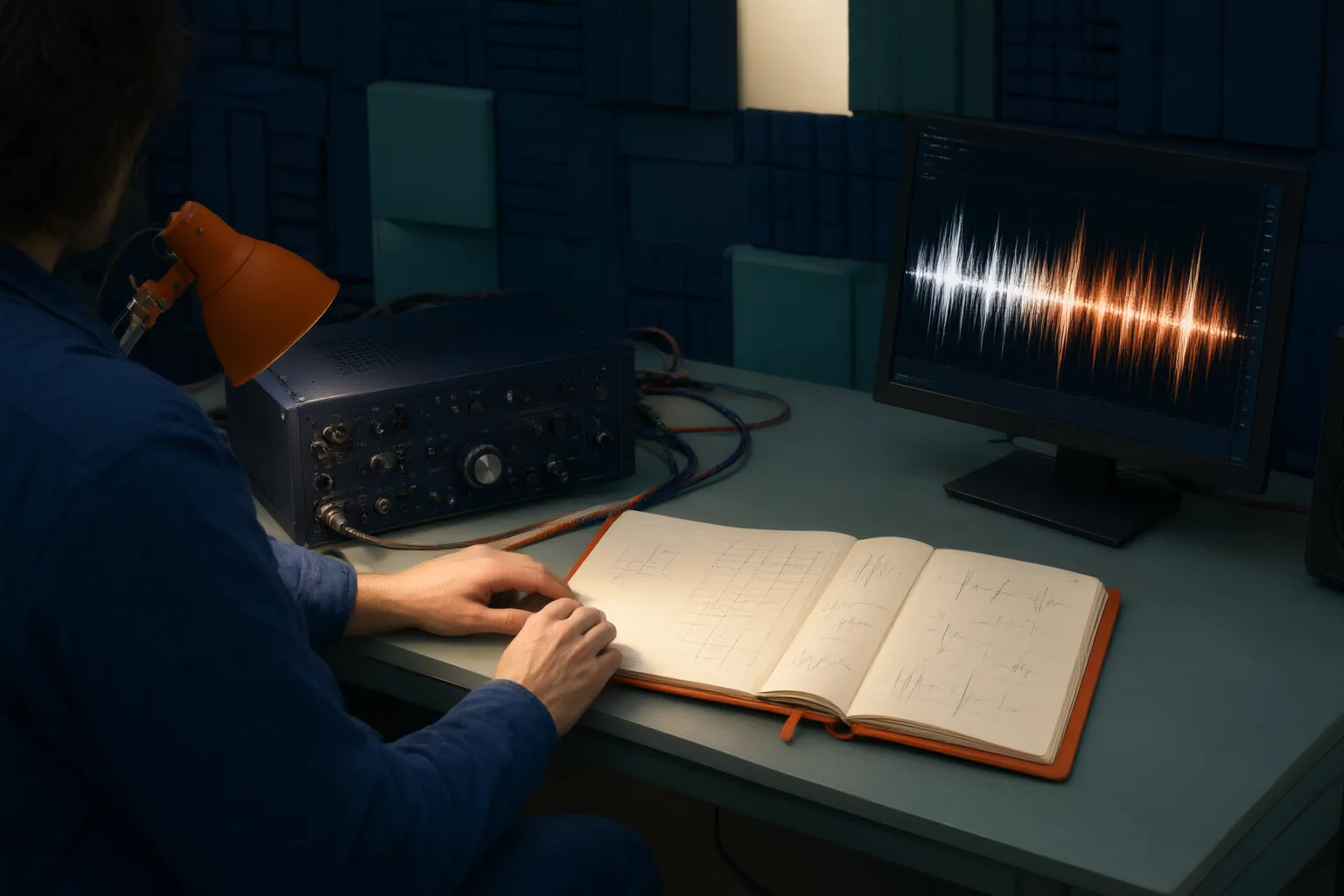
Keep a compact session record beside each batch of generated metadata. Include the AI tool and version, date, intended use, prompts, settings, and relevant identifiers. Composer.live recommends preserving these details per session and distinguishing material used only as a reference from assets actually supplied to a model.
Add the ingestion point, operation status, parameters, returned values, and available confidence scores. For every reviewed field, record the reviewer’s decision—accepted, revised, or rejected—and preserve the proposed and approved values separately. A decisions-history record makes it possible to follow how raw extraction became a cataloging output without treating either the model or the reviewer as an undocumented step.
Review should remain ongoing rather than being a one-time cleanup. Collibra notes that taxonomies and business definitions may change as new material enters a collection, so previously generated tags may need validation under revised rules. TableVault’s emphasis on standardized metadata access, parameter lineage, and operation tracing provides a framework for keeping this mixed human–AI process reproducible even when external tools cannot be instrumented completely. These records document the workflow; they do not replace checking permissions or obtaining legal guidance where rights questions arise.
Conclusion
Pilot the design on a small copy of your catalog. Preserve the originals, create separate records linked by identifiers, capture the ingestion session, and export generated results without treating them as approved metadata. Normalize the output, review low-confidence or taxonomy-sensitive fields, retain the decision history, and create final catalog outputs as a separate stage.
Before testing any service, define the metadata schema, permitted values, confidence-handling rules, reviewer actions, and provenance fields. Then verify the service’s storage, retention, privacy, and processing terms before submitting recordings. This produces a practical boundary between source audio, AI proposals, human decisions, and approved catalog data.
Disclosures and limitations
- This article was prepared with AI assistance from the supplied research package; factual claims are attributed through the accompanying source IDs. Service terms should be verified directly before recordings are submitted.
Related reading
- Digital Skills for Practical, Confident Technology Use
- Local AI Models vs. Cloud AI Services: When Creators Should Use Each
Sources
- From Upload to Output: How Cyanite Tags Music at Scale — Cyanite.ai
- Metadata Management for AI-Augmented Data Workflows — arxiv.org
- AI Music Workflow: Protect Your Rights and Ownership — composer.live
- Automated metadata workflow — productresources.collibra.com
- Cyanite Guide: Automate Music Catalog Metadata & AI Tagging — Suno Song Writter
- GitHub – utlibraries/ai-music-metadata-project: Automates basic metadata creation from images of CD covers by using GPT for metadata extraction and analysis and OCLC for grounding and enrichment. — GitHub