Small changes often improve an audio system more than another box on the desk. If your setup already plays cleanly and reliably, the next gains usually come from placement, noise control, and better matching between source, amplifier, speakers, or headphones.
Start with speaker and listener position
Move speakers so they fire toward your listening position with a clear left-right triangle. Pull them away from walls if bass feels thick or blurred, and avoid placing one speaker near a hard corner while the other sits in open space. For headphones, check seal, pad wear, and fit before judging tonality.
Reduce vibration and surface resonance
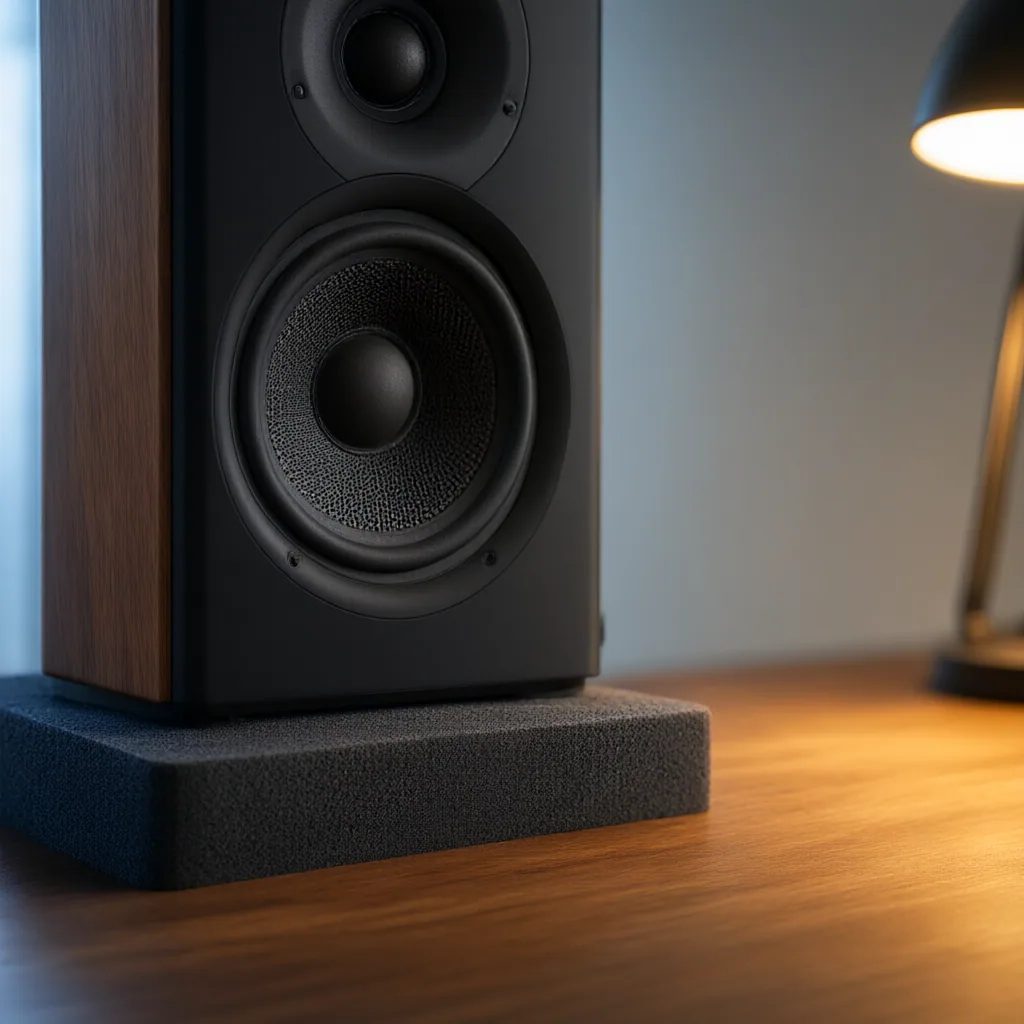
A rigid shelf, stable stand, or simple isolation layer can help turntables, desktop speakers, DACs, and small amplifiers work more consistently. You do not need luxury accessories to test this. Try repositioning gear, tightening loose feet, or adding a dense, non-slip layer under components that sit on a resonant desk.
Fix gain staging before upgrading gear
Set digital sources close to full resolution, then use the amplifier or powered speaker volume for normal listening. Very low source output can force downstream gear to work harder and may raise audible hiss. If the system sounds strained, confirm that no stage is clipping and that sensitive headphones are not paired with excessive gain.
Tame the room and the signal path
Bare walls, glass, and empty desks can make sound feel sharp. Curtains, books, rugs, and soft furnishings often do more for clarity than a budget cable swap. Keep analog cables short where practical, separate power bricks from signal cables, and clean dusty connectors if crackle appears during use.
Upgrade only after the bottleneck is clear
When you can describe the problem precisely, spending becomes smarter. Weak bass control, poor imaging, listening fatigue, and background noise each point to different causes. A careful setup check costs little, teaches you how your system behaves, and often delivers the most noticeable listening improvement per dollar.