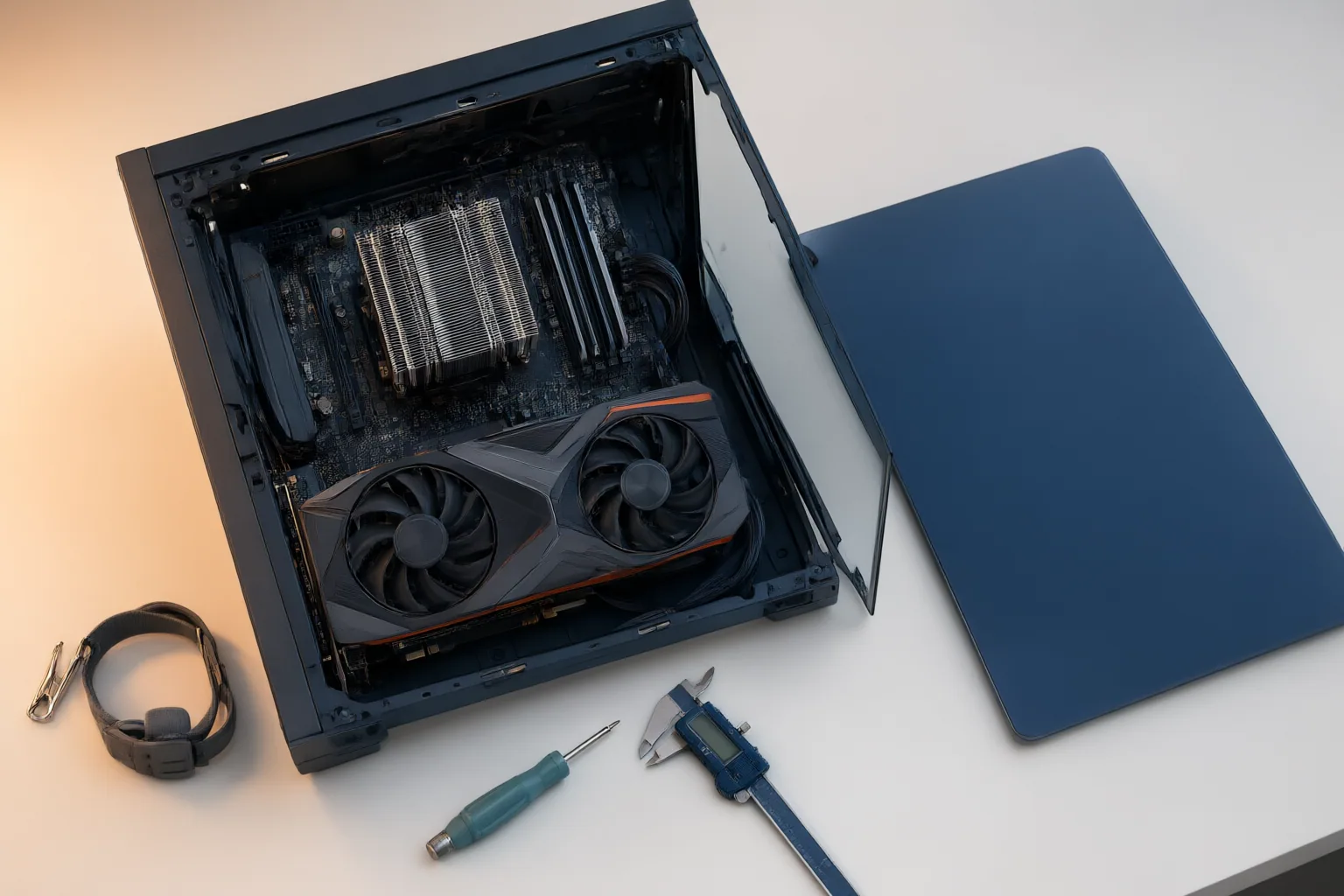
Choose a gaming computer by ranking the work it must handle, accounting for the complete desktop or laptop setup, and verifying repair and upgrade compatibility for each specific model and generation. The available sources support this evaluation process but do not establish universal performance targets or justify particular product recommendations.
Start With the Work You Need the Computer to Do
Begin with workloads, not a product label. The cited university program connects graphics and game development with programming, 2D and 3D graphics, graphical visualization, virtual reality, video games, simulations, and educational technologies. It also describes games and simulations as ways to gain practical experience and experiment with scenarios in a safe environment. That range shows why a learner or creator may expect one computer to serve several purposes.
Write down every intended use, then identify the three that matter most. Separate essential work from activities that are merely desirable. For example, a reader might prioritize programming, 3D graphics, and simulations while treating virtual reality as optional. Describe the actual projects associated with each priority so comparisons remain tied to practical needs.
Do not turn this list into unsupported hardware targets. The supplied evidence does not provide benchmarks or universal specifications for these workloads. Use the priorities to form questions for manufacturers and product documentation rather than assuming that every machine marketed for gaming will suit every learning or creative task.

Compare the Complete Desktop or Laptop Setup
Treat the purchase as a setup decision rather than a computer-only decision. TechRadar divides its gaming-computer coverage among PCs, laptops, components, and accessories; its captured page also spans display choices from high-refresh-rate 1080p monitors to 4K OLED screens. This breadth illustrates how several connected categories can shape a gaming-computer purchase.
First decide whether you are comparing desktop PCs, laptops, or both. For each candidate, record which necessary components, accessories, and display arrangements are included and which must be considered separately. Keep display preferences in their own checklist instead of assuming that a computer choice determines the monitor choice. This makes unlike packages easier to compare on the same basis.
The research package contains no structured prices, ratings, review totals, or independently verified benchmark set. It therefore cannot support a claim that one form factor, display class, or model is the best value or fastest choice. Compare specific products only after defining the complete setup you require and obtaining current product details from their manufacturers.
Check Repairability, Expansion, and Compatibility
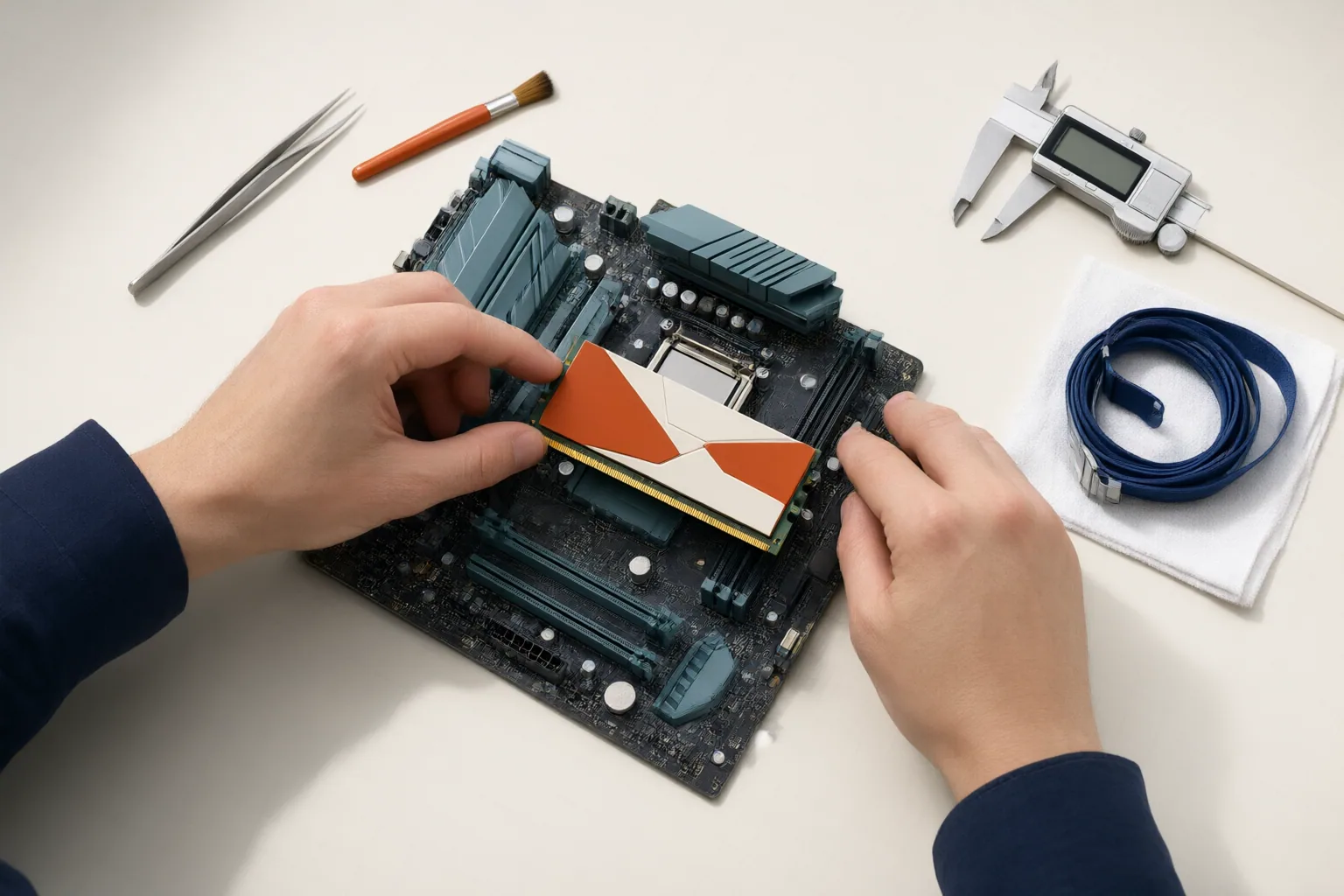
Upgradeability should be checked component by component. The supplied Framework guide describes replaceable RAM, storage, batteries, displays, keyboards, Wi-Fi modules, and mainboards, while warning through its model details that exact compatibility varies by model and generation. Use those categories as questions to investigate, not as assumptions about another computer.
The guide presents the Framework Laptop 16 as a creator-and-gaming example with a replaceable GPU module, two storage slots, six expansion bays, and a user-replaceable battery. This demonstrates how a modular design can expose several distinct expansion decisions. It does not establish that the machine is superior, appropriate for every workload, or more durable than alternatives.
For each candidate, record whether the memory, storage, battery, display, keyboard, Wi-Fi module, mainboard, ports, and graphics hardware can be replaced or expanded. Then verify the supported part, model, and generation for every feature that matters. Do not treat the presence of a replaceable part in one configuration as proof that another configuration accepts it. The source includes affiliate links and promotional claims, so its details are useful here only as an attributed example of what buyers can verify.
Conclusion
A practical comparison begins with three lists: priority workloads, the complete setup, and desired repair or upgrade paths. The workload list keeps games, programming, graphics, visualization, virtual reality, and simulations in a deliberate order. The setup list accounts for whether you are considering a PC or laptop as well as relevant components, accessories, and displays. The upgrade list turns broad promises into model-specific compatibility questions.
Before buying, write down your three priority workloads, required peripherals, and upgrade expectations. Use that checklist to compare individual computers, and verify every important component or compatibility claim with the manufacturer for the exact model and generation.
Disclosures and limitations
- This article was prepared with AI assistance from the supplied research package. Its factual claims are limited to the three cited sources, and no products were personally tested or independently benchmarked.
- The Framework source contains affiliate links and promotional claims. It is used only for attributed hardware examples, not as evidence of superiority; readers should also recognize that product coverage or purchase links may involve affiliate incentives.
Related reading
- Digital Skills for Practical, Confident Technology Use
- AT&T 2024 Data Breach Settlement: How to Check Notices and Protect Your Accounts
Sources
- GitHub – mhxion/awesome-discord-communities: A curated list of awesome Discord communities for programmers — GitHub
- Framework Laptop Upgrade Guide (2026) — The Most Upgradeable Laptop Ever Made | Computer Compatibility — Computer Compatibility
- About the Department – Faculty of Applied Informatics — Faculty of Applied Informatics
- Gaming – Computer.Com — Computer.Com
- Gaming Computers Coverage | TechRadar — TechRadar