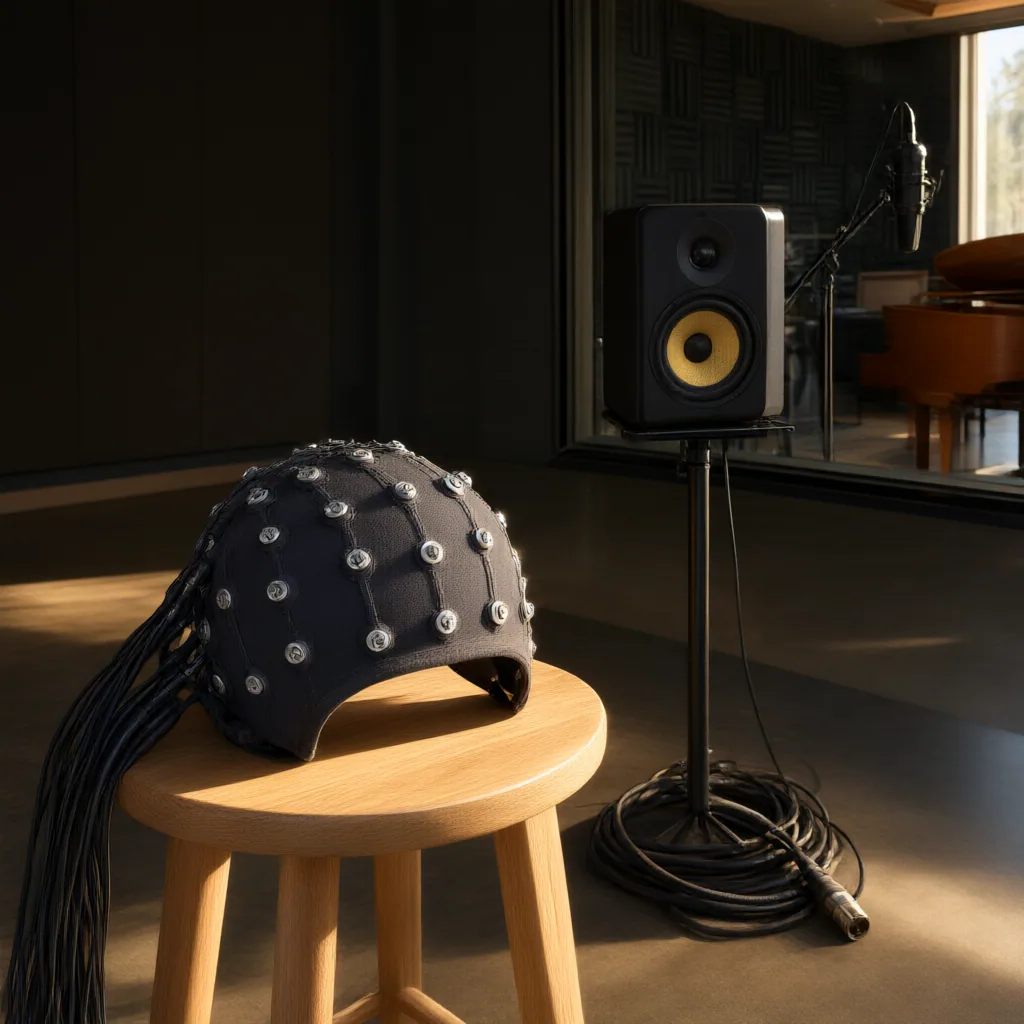
Musicians, meditation practitioners, and readers exploring consciousness often encounter brainwave terms that sound precise but are not always used with the same meaning. This page helps you sort out the vocabulary around gamma, hypergamma, lambda, and epsilon brainwave activity, especially where music, attention, and altered states are discussed together. The key distinction is simple: some labels are well established in EEG research, while others are used more loosely in therapeutic, spiritual, or audio-entrainment conversations.
Where standard EEG terminology is firm
In mainstream electrophysiology, the most widely recognized bands are usually described as delta, theta, alpha, beta, and gamma. These labels are useful because they connect frequency ranges to patterns researchers can actually measure on the scalp or, in some cases, infer alongside other imaging methods. Even then, brain activity is not a set of neat mental boxes. A frequency band can appear in different tasks, and the meaning of that activity depends on location, context, and the method used to record it.
Gamma is the clearest of the four terms on this page in conventional research language. It is commonly associated with fast neural activity discussed in relation to attention, sensory binding, working memory, and intensive cognitive processing. That does not mean gamma automatically signals insight, healing, or a superior state of consciousness. It means the term has a recognizable place in scientific literature and should be interpreted carefully.
Why hypergamma, lambda, and epsilon are harder to pin down
Hypergamma is often presented as a higher extension of gamma activity, but it is not a universally standardized public-facing label in the way alpha or beta are. When you see it in music or consciousness writing, check whether the author defines the frequency range, recording method, and purpose of the claim. Without that context, the term can drift from measurement into metaphor.
Lambda and epsilon are even more variable across discussions. In some communities, they are used to describe unusually high-focus, integrative, or very slow deep-rest states. That can be meaningful as an internal framework for teaching meditation, sound work, or consciousness models, but it should not be mistaken for settled consensus. If a page treats lambda or epsilon as universally accepted clinical categories without explaining the evidence base, that is a sign to slow down.
How music and consciousness discussions use these labels
Music-centered conversations often use brainwave terminology in two different ways. One is descriptive: certain rhythms, repetition, timbre, or listening conditions may be said to support relaxation, concentration, or absorption. The other is causal and much stronger: the claim that a sound program directly produces a named brainwave state with predictable results. The first is a reasonable area for exploration. The second requires stronger evidence than many popular summaries provide.
That is why language matters. Saying that music is used alongside meditation or attention training is different from saying it induces epsilon or lambda activity in a reliable, measurable way. Evidence-aware writing keeps those claims separate.
A practical way to read brainwave claims
When comparing sources, ask four questions: What band is being named? Is the frequency range defined? Was the activity measured with a stated method such as EEG? Is the claim describing correlation, interpretation, or direct effect? Those questions help separate established terminology from speculative framing.
For readers interested in music and consciousness, the most useful approach is not to reject the whole topic, but to read it with technical discipline. Gamma has a clearer research footing; hypergamma, lambda, and epsilon often require more explanation and more caution. Used carefully, these terms can support thoughtful discussion. Used carelessly, they can make broad promises sound more settled than the evidence allows.