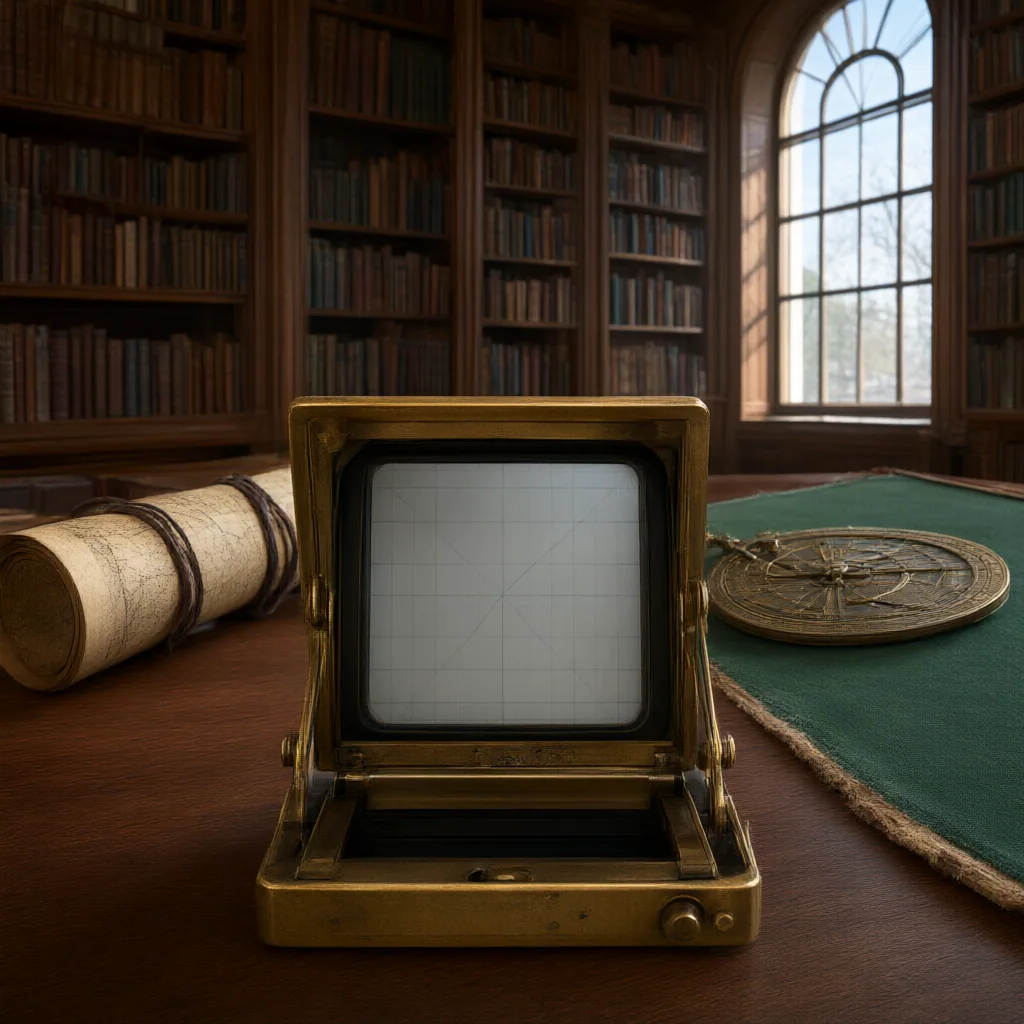
Imagination matters whenever people rehearse an action before taking it, picture a place that is not in front of them, or test an idea without moving a single object in the room. This page looks at how imagination and mental imagery relate to consciousness and cognition, with care about what is well supported, what remains debated, and why the distinction matters for learning, creativity, and self-understanding.
Imagination is more than daydreaming
In cognitive terms, imagination is the mind’s ability to generate, combine, or transform content that is not directly given by current perception. That can include visual scenes, remembered sounds, possible conversations, symbolic ideas, and imagined bodily movement. Mental imagery is one important part of this picture: it refers to experience that resembles seeing, hearing, or sensing, even when the stimulus is absent.
These processes support ordinary tasks. A musician may mentally rehearse a phrase before playing it. A student may picture a diagram while solving a problem. A designer may compare alternative layouts internally before choosing one. In each case, imagination helps bridge perception, memory, planning, and evaluation.
How mental imagery connects to cognition
Mental imagery is often discussed as if it were only visual, but cognition draws on several forms of internally generated representation. People may imagine a melody, a spoken sentence, a route through a building, or the feel of a hand movement. The important cognitive question is not only whether imagery feels vivid, but what work it performs.
Research and theory commonly link imagery to memory retrieval, prediction, spatial reasoning, motor planning, and creative recombination. Still, not every thought depends on image-like experience. Some people report highly vivid internal pictures, while others rely more on verbal, conceptual, or procedural thinking. That variation is a useful reminder that cognition is broader than any single mental style.
Consciousness and the problem of experience
Consciousness enters the discussion because many acts of imagination are experienced from the inside. A person can notice an image becoming sharper, an imagined sound fading, or attention shifting from one possibility to another. That subjective dimension makes imagination a useful topic for philosophy as well as science.
One recurring question is whether conscious imagery is central to thought or only one layer of it. Some theories emphasize the reportable, felt character of experience. Others focus on the underlying information-processing functions that may operate with limited awareness. Neither approach fully eliminates the other. A scientific account can describe mechanisms and performance, while a philosophical account can ask what it is like to imagine and how that differs from merely processing information.
Scientific and philosophical approaches meet at the boundary cases
The most interesting debates often appear at the edges: involuntary imagery, dream imagery, inner speech, meditative awareness, and disorders of perception or self-monitoring. These cases test simple assumptions. If imagery can occur without deliberate control, where does agency begin? If conscious experience can be vivid but misleading, how should cognition evaluate it? If a thought is structured but not image-like, is imagination still involved?
Historical discussions anticipated many of these tensions. Philosophers treated imagination as a mediator between sensation and understanding, sometimes as a creative faculty and sometimes as a source of error. Contemporary work tends to ask more fine-grained questions about representation, attention, embodiment, and neural correlates, but the older concern remains recognizable: how does the mind move beyond what is immediately given?
Why this topic still matters
Imagination, mental imagery, consciousness, and cognition belong together because they illuminate how people simulate possibilities, reflect on experience, and organize action. For readers interested in learning, artistic practice, problem-solving, or philosophy of mind, the value is practical as well as theoretical. Better distinctions help separate vivid experience from reliable evidence, creativity from confabulation, and introspection from explanation.
A careful approach does not reduce imagination to fantasy, nor does it treat every inner experience as transparent truth. It asks what kind of mental content is present, what role it plays, how it is known, and where interpretation begins. That is the point at which scientific, philosophical, and historical approaches become most useful together.