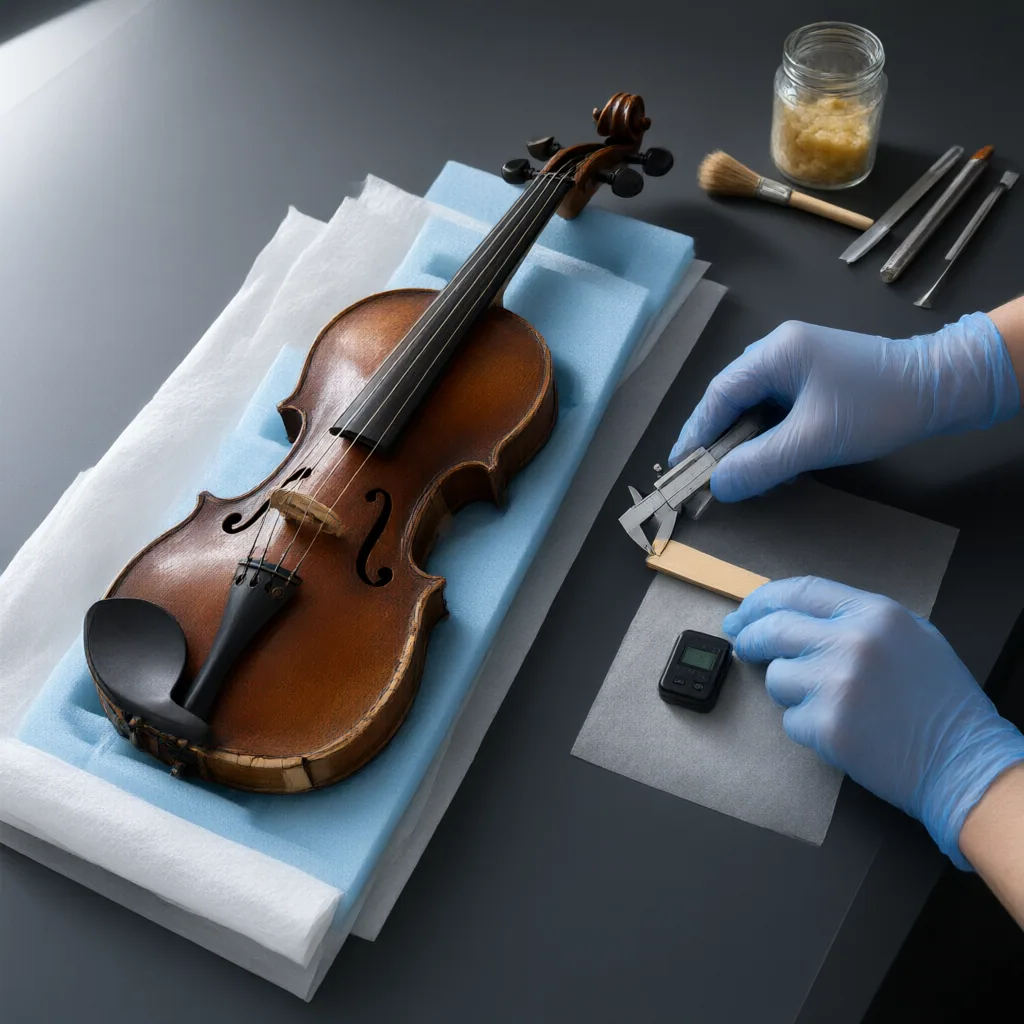
Musical instruments demand a different level of care from most studio or collection objects because they combine fragile materials with moving parts, tuned surfaces, and finishes that can be altered by poor handling. This page is for readers who need a practical starting point for understanding conservation priorities, especially when deciding what can be managed through routine preventive care and what should be left to a trained conservator.
What makes instruments difficult to conserve
A violin, flute, drum, or keyboard instrument may include wood, metal, leather, adhesives, textiles, varnish, ivory substitutes, and mechanical assemblies in one object. Each material reacts differently to humidity, temperature, light, dust, and physical stress. An instrument can also be damaged by well-meant maintenance: aggressive polishing, over-tightening, forced disassembly, or cleaning products chosen for appearance rather than long-term stability.
Preventive care comes before treatment
For most instruments, good conservation starts with prevention rather than repair. Stable environmental conditions matter more than frequent intervention. Sudden shifts in humidity can crack wood, loosen joints, distort membranes, and encourage corrosion or mold. Safe storage, padded support, clean handling, and careful transport reduce risk far more effectively than cosmetic touch-ups. If an instrument is still playable, use should be planned with the same care as storage, since performance places stress on keys, strings, valves, bridges, pads, and finishes.
How to read conservation recommendations
Useful conservation guidance usually separates three layers of decision-making. The first is condition awareness: identifying vulnerable materials, existing damage, and signs of active deterioration. The second is access management: deciding whether an instrument is for display, study, recording, demonstration, or regular playing. The third is treatment planning: knowing when specialized assessment is needed before cleaning, adjustment, or restoration. Annotated references are valuable here because they do more than list titles; they help readers compare scope, authority, and intended use.
Questions worth asking before any intervention
Before acting, clarify whether the goal is preservation, safe handling, documentation, or return to playing condition. A museum object, a teaching collection piece, and a working studio instrument may require different choices even when they look similar. Check whether original materials are especially sensitive, whether previous repairs have introduced instability, and whether replacement parts would change the instrument’s historical or acoustic character. When uncertainty remains, the safest course is limited handling, careful documentation, and specialist advice.
Building a reliable reference base
A strong conservation reading list should cover preventive conservation, packing and shipment, ethics of restoration, access policies for public collections, and material-specific care for instrument families such as keyboard, wind, brass, and string instruments. Readers who maintain instruments in collections or educational settings benefit most from sources that explain both boundaries and procedures: what can be monitored in-house, what requires conservation training, and how risk changes when an instrument is moved, played, or exhibited.
Conservation recommendations are most useful when they support calm decisions rather than quick fixes. For musical instruments, that usually means protecting condition, documenting change, and treating every intervention as something that should preserve both function and material integrity whenever possible.