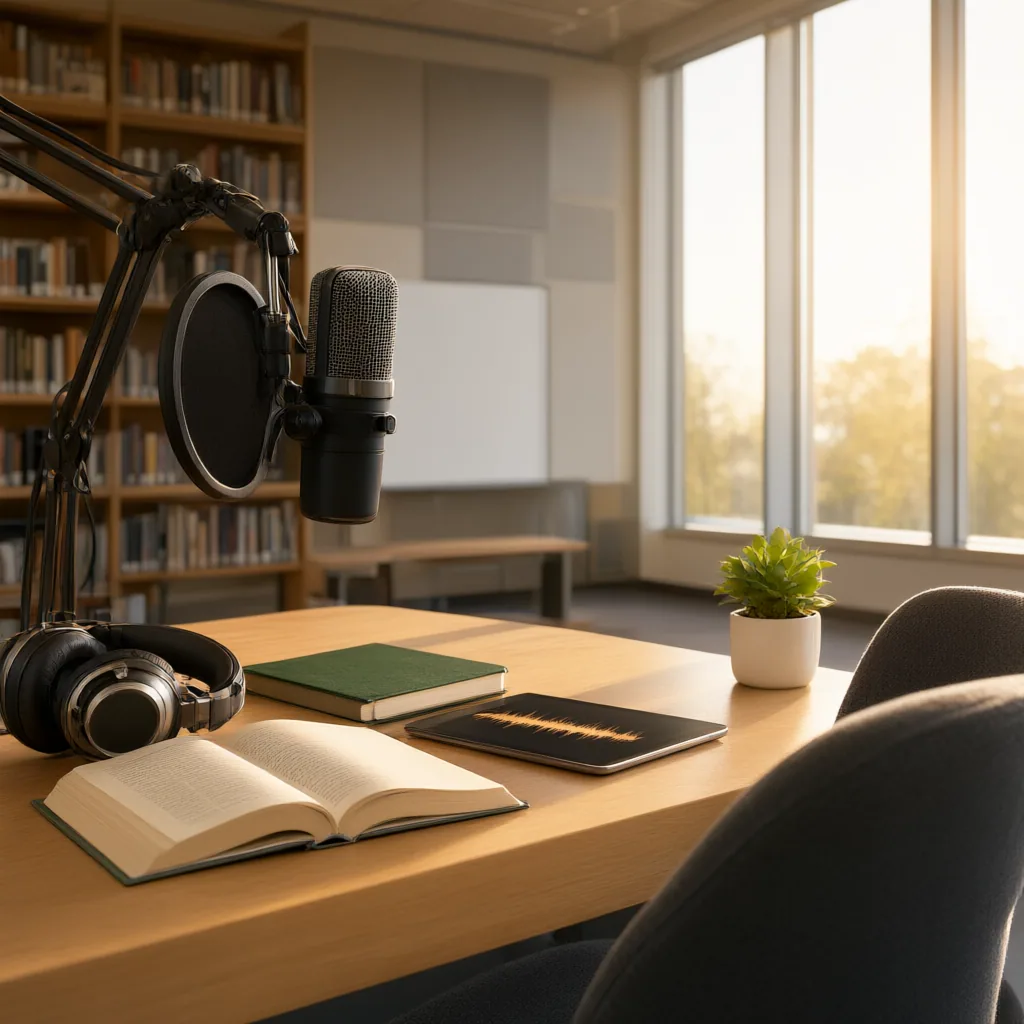
Podcasting works especially well when a course needs explanation, reflection, and repeat listening without forcing learners to stay on screen. For educators, it offers a flexible format for lectures, short prompts, interviews, feedback, and guided discussion that can fit both fully online and blended teaching.
Where podcasting adds value in a course
Audio is strongest when voice carries meaning that slides or text alone cannot. A teacher can clarify tone, pace a complex idea, model emphasis, or make abstract concepts feel more human. In teacher education, language learning, seminar-based subjects, and project courses, this can support orientation, weekly framing, and moments of synthesis between readings or activities.
Podcasting also helps learners control time. Episodes can be paused, replayed, or revisited before assignments, during commuting, or while reviewing difficult material. That makes it useful for students who benefit from repetition and for courses where attention is split across work, family, and study.
Choosing the right instructional format
Not every educational podcast should sound like a radio show. A short briefing episode may work better than a polished long-form production if the goal is to prepare students for a task. Common formats include:
– instructor commentary that connects the week’s topics – conversational interviews with practitioners or guest teachers – reflective prompts for discussion or journaling – narrated walkthroughs of case studies, texts, or learning sequences
The format should match the teaching purpose. If students need step-by-step visual guidance, audio alone may be too limited. If they need context, motivation, and conceptual framing, podcasting can be a strong fit.
Production choices that affect learning
Educational audio does not need expensive gear, but it does need clarity. Clean speech, steady levels, and minimal background noise matter more than dramatic sound design. A simple outline usually produces better listening than a fully scripted block of dense prose, because spoken language needs shorter sentences and clearer transitions.
Structure is just as important as sound quality. Learners benefit when episodes begin with the question being addressed, identify what to listen for, and end with a concrete next step such as a reading, discussion prompt, or activity. Segmenting longer material into shorter episodes also makes review easier.
Accessibility should be planned from the start. Transcripts, concise episode descriptions, and consistent naming make audio easier to use, quote, search, and revisit. In practice, these supporting materials often determine whether a podcast becomes a real learning resource or just an extra channel that students ignore.
Integrating podcasts with the rest of the learning environment
The most effective course podcasts are rarely standalone. They work best when tied to the wider learning design: readings, forums, assignments, live sessions, or feedback cycles. An episode might introduce a topic before class, extend a discussion after class, or help students reflect on practice during fieldwork.
For educators, the useful question is not whether podcasting is innovative, but what kind of mediation it provides. Audio can bridge distance, sustain presence, and make instruction feel continuous between scheduled sessions. Used carefully, it becomes part of the course architecture rather than an isolated media experiment.
A practical standard for educational podcasting
A good educational podcast is purposeful, listenable, and connected to clear learning outcomes. It should respect learners’ time, support multiple ways of engaging with the material, and sit naturally alongside text, visuals, and discussion. When those conditions are met, podcasting in education becomes less about format novelty and more about improving how teaching is heard, remembered, and used.