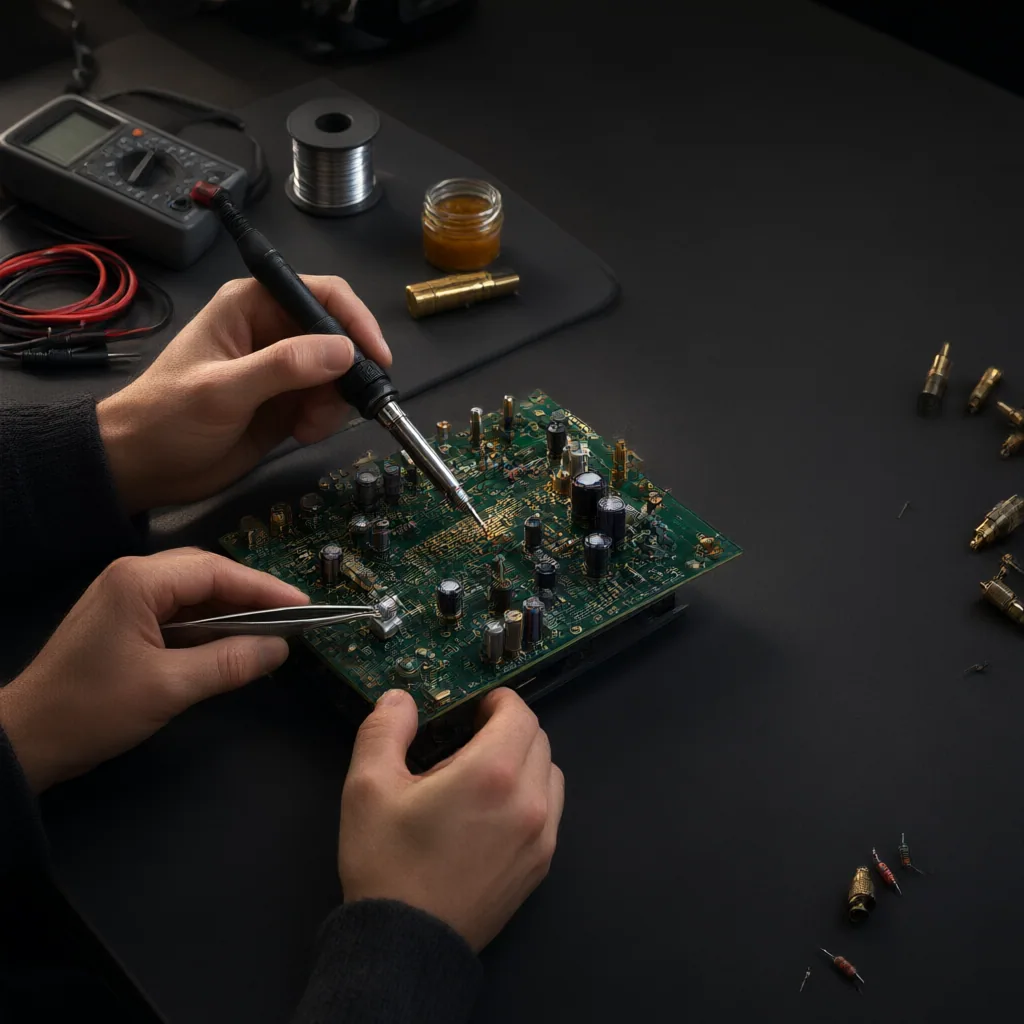
Signal & Circuit is a reference site for readers who want technical subjects explained without jargon, hype, or guesswork. The goal is practical understanding: how sound behaves, how circuits are built and repaired, how recording tools shape results, and how digital systems affect everyday creative and learning work. We write for curious beginners, working musicians, students, educators, and experienced makers who value clear language as much as correct terminology.
What This Publication Covers
The site brings together several subject areas that often overlap in real projects. Audio articles focus on listening systems, signal flow, components, formats, and measurement. Electronics guides cover bench skills, components, soldering, board-level work, and safe troubleshooting habits. Recording material looks at workflow, monitoring, mastering, and production decisions. We also publish pieces on digital skills, visual media, and selected topics in cognition when they help readers understand perception, learning, or technical decision-making.
What connects these subjects is method. A loudspeaker problem, a solder joint failure, a confusing software setting, and a misleading online claim all benefit from the same habits: define the terms, inspect the signal path, separate observation from interpretation, and avoid stronger conclusions than the evidence supports.
How We Approach Explanations
Each page is written to help readers do something useful with the information. That may mean choosing the right connection standard, understanding why a measurement is expressed in decibels, recognizing the limits of a broad claim, or preparing for a repair before heat ever touches a board. We prefer concrete examples, plain definitions, and stepwise structure over abstract summary.
When a topic involves risk, the page should make that risk legible. In electronics, that can mean heat, stored charge, fragile pads, or poor ventilation. In audio, it can mean mismatched expectations, misunderstood specifications, or hearing-related concerns. In online decision-making, it can mean promotions, incentives, or claims that are easy to repeat but hard to verify. The purpose is not alarmism; it is better judgment.
Editorial Principles
Signal & Circuit aims to be approachable without becoming vague. We try to distinguish established knowledge from interpretation, and interpretation from speculation. If a subject is contested, incomplete, or dependent on context, the page should say so directly. If a page offers a procedure, it should help readers understand prerequisites, likely failure points, and when stopping is wiser than forcing progress.
We also avoid pretending that every topic has a single perfect answer. Tool choice, workflow, and system design often depend on budget, environment, compatibility, maintenance tolerance, and skill level. Good guidance should leave room for those differences while still helping readers make decisions with confidence.
Sources, Revisions, and Corrections
We aim to build pages that can stand on their own, but they should also reflect responsible sourcing and review. Technical claims deserve traceable support, especially when they concern safety, measurement, compatibility, or contested interpretations. Where evidence is limited, we keep the language proportionate.
If a page contains an error, becomes outdated, or needs clearer framing, it should be revised. Corrections matter here because readers may use this material to buy equipment, diagnose faults, plan lessons, or carry out hands-on work. Precision is not just editorial polish; it is part of the usefulness of the site.
Signal & Circuit exists to make technical knowledge more usable. If a page helps a reader understand a system, ask a better question, or avoid a preventable mistake, it is doing its job.