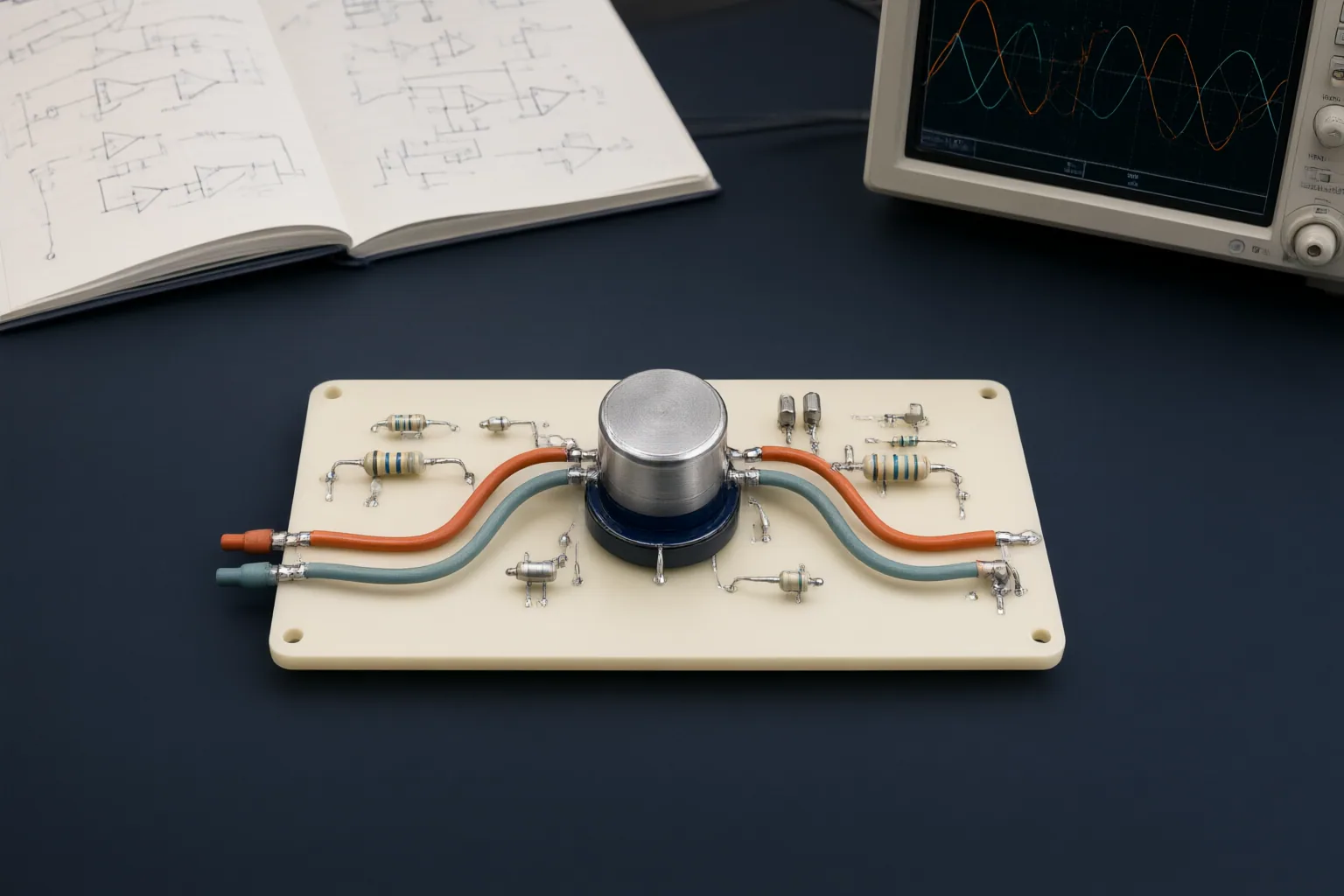
In analog audio, “balanced” describes a connection in which a receiving device responds to the voltage difference between two conductors. When both conductors pick up the same induced interference, that shared noise can be cancelled, helping reduce some hum and buzz—but only when the relevant signal path is balanced.
What “Balanced” Means in Analog Audio
In general electronics terminology, “balanced” refers to signals or circuitry arranged symmetrically around earth or another reference potential. A practical balanced analog-audio connection uses two signal conductors along with a ground or screen. Instead of treating either conductor alone as the complete signal, the receiving device responds to the voltage difference between them.
That arrangement is the key idea. “Balanced” does not simply mean that a cable looks professional, has a particular plug, or is physically symmetrical. It describes how the signals, conductors, and receiving circuit relate to one another. The two-conductor arrangement gives the receiving input a way to distinguish the intended differential signal from unwanted electrical energy that appears similarly on both conductors.
How a Balanced Connection Can Reduce Hum and Buzz
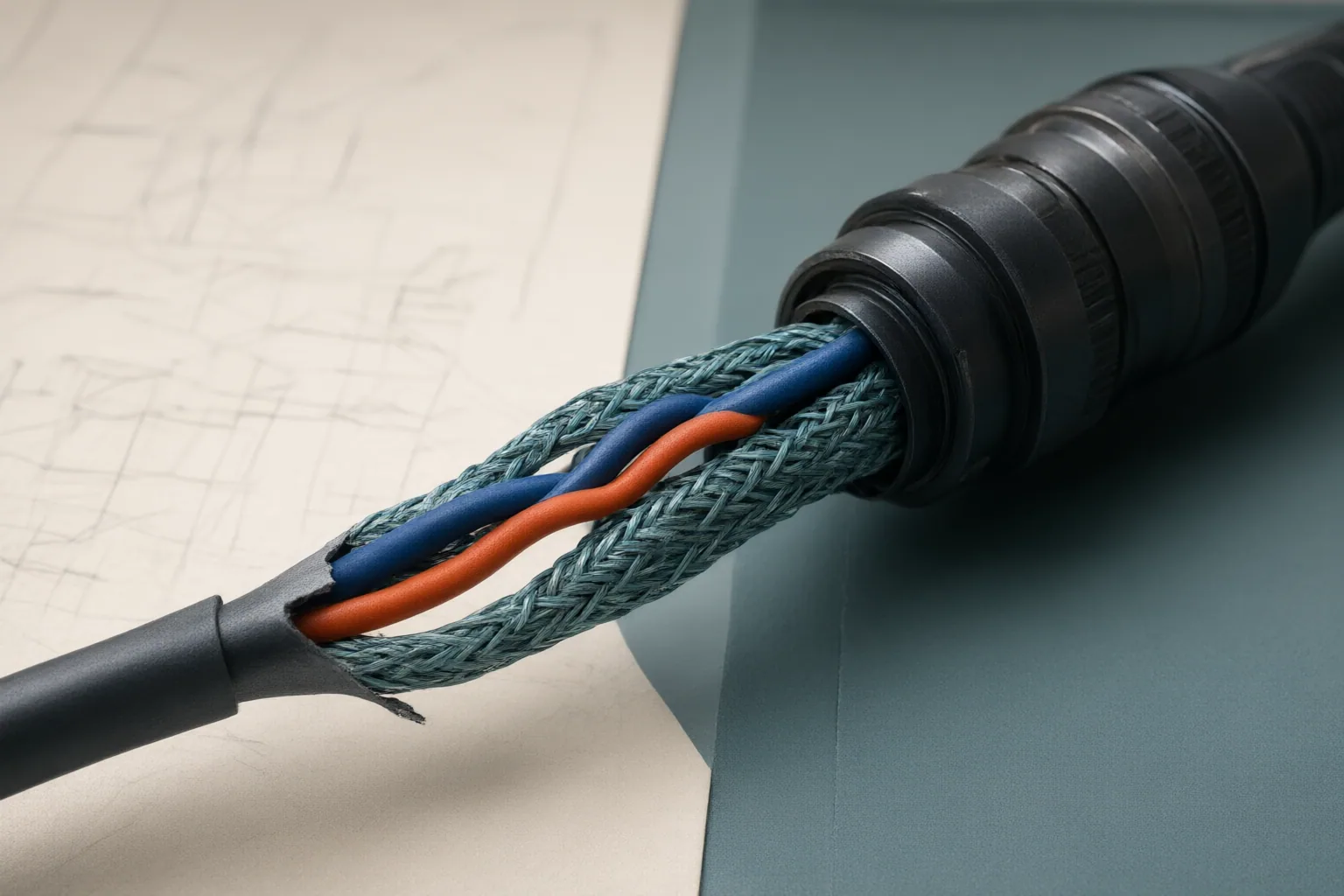
Audio cables can encounter electromagnetic fields from nearby equipment, including some power supplies. Those fields can induce electrical energy in the cable, and the resulting interference may be heard as hum or buzz.
In a balanced connection, interference picked up in the same way by both signal conductors can be cancelled when the receiving device evaluates the voltage difference between them. Because the shared interference does not represent a difference between the conductors, the balanced receiver can reject it while retaining the wanted differential signal.
This explains both the benefit and its boundary. Balancing is relevant when unwanted noise is being induced along the cable and is shared by its two conductors. It should not be treated as a promise to eliminate every possible source of hum or buzz. Cable placement still matters: routing audio cables sensibly and keeping them away from nearby electromagnetic-field sources can reduce the opportunity for interference to enter the cable in the first place.
Cables, Connectors, and the Complete Signal Path
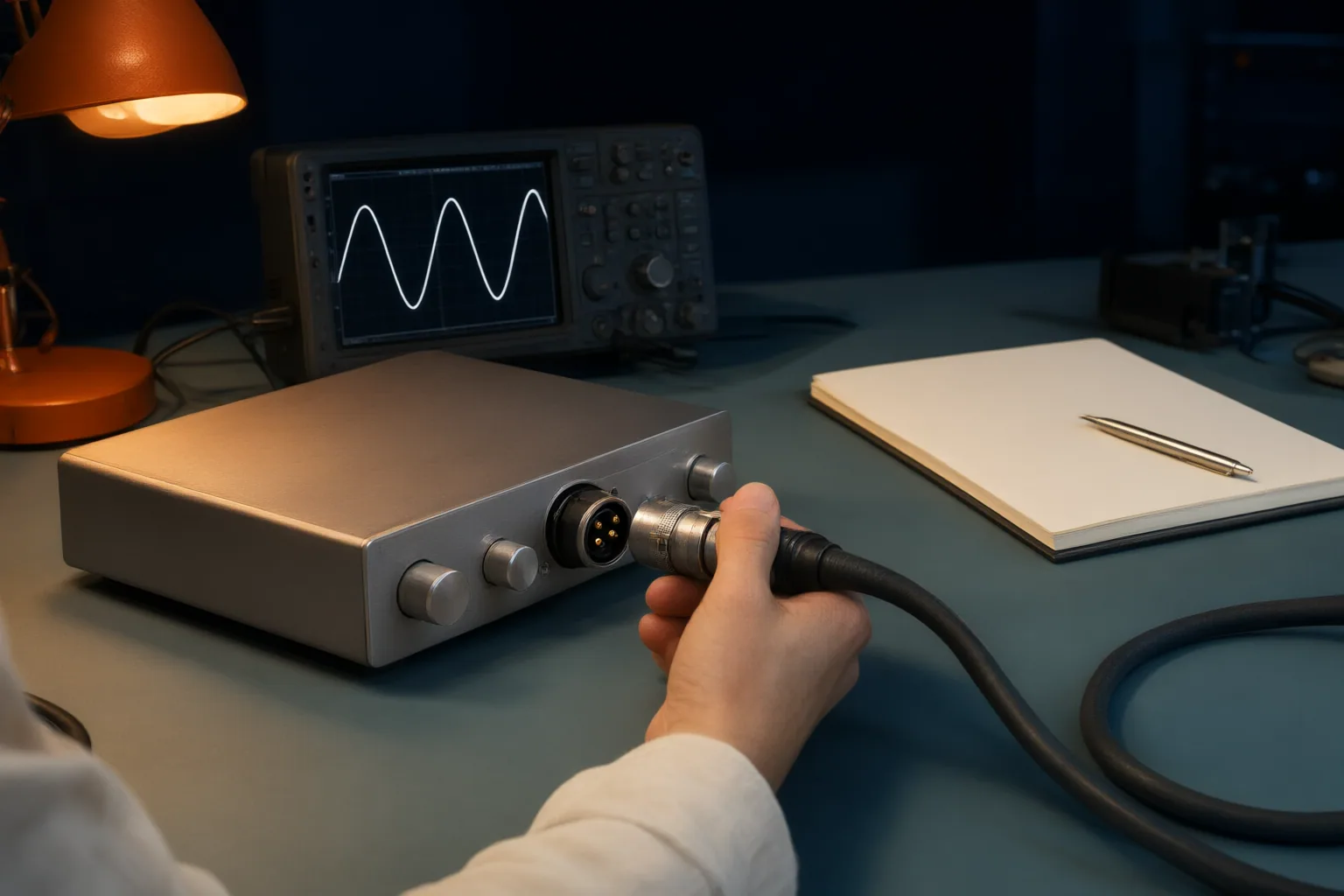
Connector shape alone does not establish whether an audio path is balanced. A quarter-inch TRS connector has the contacts needed to carry a balanced connection, while a TS connector has two contacts and is distinguished from TRS. XLR is another widely used connector type for analog audio. Even so, recognizing a TRS or XLR plug is not enough to confirm the topology of the complete connection.
The relevant output, cable wiring, and receiving input must support the balanced arrangement for its interference-rejection benefit to apply. Connecting balanced and unbalanced equipment may still pass audio, but that does not mean the resulting path provides balancing. Likewise, substituting a cable associated with balanced audio cannot turn an unbalanced endpoint into a balanced one.
For troubleshooting, examine the path as a system rather than judging it by one plug. Check the documentation for the sending device’s output and the receiving device’s input, then verify that the cable wiring is appropriate for those connections. This prevents a common diagnostic mistake: assuming that audio passing through the cable proves that the balancing function is active.
Conclusion
A balanced analog-audio connection can help when hum or buzz comes from electromagnetic interference induced along a cable and picked up by both signal conductors. Its receiving circuit can reject that shared interference by responding to the difference between the conductors. The benefit, however, depends on the relevant connection being balanced rather than on the cable or connector appearance alone.
Check the output specification, cable wiring, and input documentation for the entire signal path. Then reroute the cable away from nearby power supplies and other electromagnetic-field sources before deciding whether balancing addresses the hum or buzz.
Disclosures and limitations
- This article was prepared with AI assistance from the supplied research package. Detailed analog-audio guidance is attributed to Focusrite, while the broader electronics definition of “balanced” is attributed to Dictionary.com.
Related reading
Sources
- Article Detail — service.shure.com
- System Science – Part 3: Analogue Connections — Focusrite
- balanced — dictionary.cambridge.org
- USE Definition & Meaning | Dictionary.com — dictionary.com
- BALANCED Definition & Meaning | Dictionary.com — dictionary.com