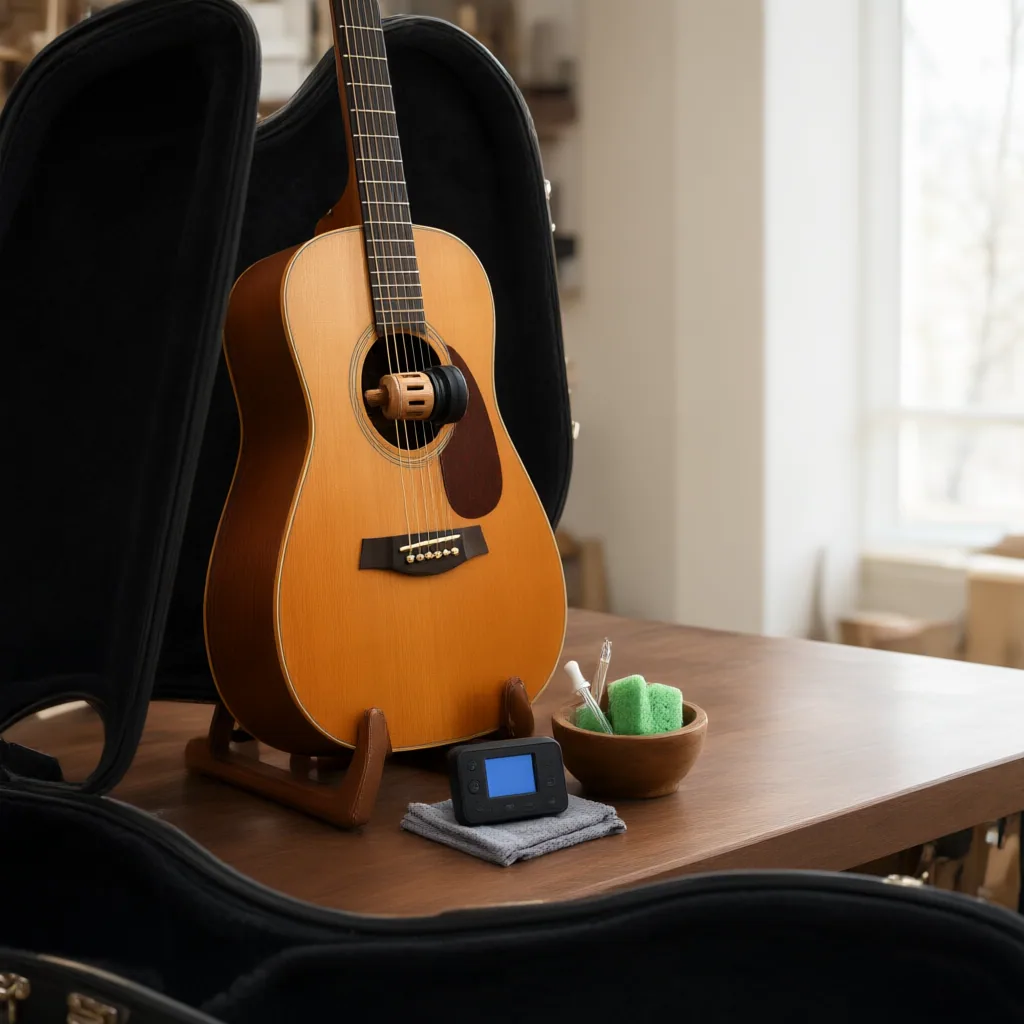
Dry indoor air can change the feel, sound, and structural stability of an acoustic guitar long before obvious cracks appear. A humidifier is not just a winter accessory; it is a simple way to keep the wood closer to the conditions the instrument was built for. For players who record, practice daily, or store a guitar between sessions, the real job is not only adding moisture but tracking whether the guitar is staying in a safe, consistent range.
What a humidifier is meant to control
An acoustic guitar responds to humidity because its top, back, sides, neck, and fingerboard all expand or contract with the surrounding air. When conditions become too dry, the top may sink slightly, fret ends can feel sharper, and the instrument may lose some warmth or responsiveness. Excess moisture can create the opposite problem, with swelling, higher action, and a less focused tone. A guitar humidifier helps slow those swings by adding moisture inside the case or, in some setups, directly near the soundhole.
Where monitoring matters most
The most useful habit is pairing the humidifier with a hygrometer. Case humidity tells you more than guesswork based on the season. If the reading trends dry, recharge or refill the humidifier sooner; if it stays high for long periods, reduce the moisture source and let the case air out. Short-term fluctuations are normal, but repeated extremes are the warning sign. Room conditions matter too, especially if the guitar spends hours on a stand rather than in its case.
Practical use without overdoing it
A humidifier works best when it is maintained regularly and checked before it dries out completely. Use clean water when the product requires it, avoid dripping moisture onto the instrument, and make sure any insert or sponge is damp rather than wet. The goal is stable humidity, not maximum humidity. If the guitar lives in a hard case, that enclosed space usually makes monitoring easier and the humidifier more effective. In open-air storage, whole-room control may be more important than a case accessory alone.
Signs your setup needs adjustment
Watch for changes in playability and appearance. Lower action, a flattened top, fret sprout, or a suddenly brittle tone can point to overly dry conditions. A raised top, sluggish response, or noticeably higher string height can suggest too much moisture. These signs are not a substitute for measurement, but they help confirm whether your current routine is working. When changes appear quickly, inspect the instrument carefully and avoid assuming that more humidity is always the answer.
Building a steady care routine
The best acoustic guitar humidifier routine is simple: measure, adjust, and recheck. Keep the guitar in a predictable environment, inspect it during string changes, and treat humidity control as part of normal instrument care rather than emergency repair prevention. That approach is especially useful for solid-wood instruments, vintage guitars, and any guitar used for recording, where small physical changes can affect tuning stability and tone. A humidifier is most effective when it becomes part of a consistent care system, supported by observation instead of guesswork.